


Cell Therapy for Spinal Cord Injuries
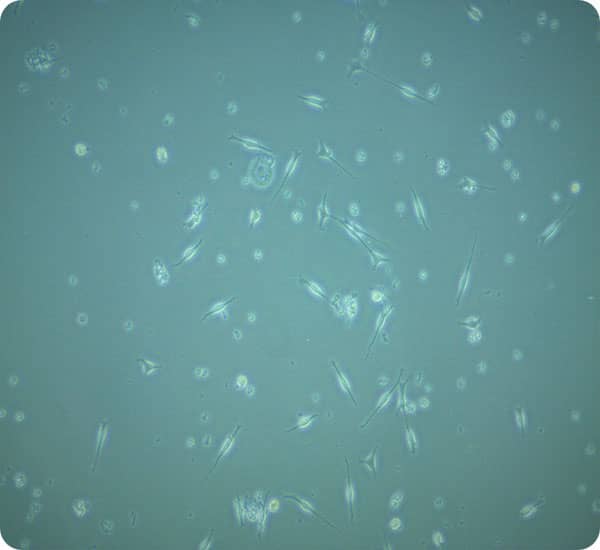
Companion dogs have a high rate of intervertebral disc degeneration and this leads to acute nuclear herniation (commonly known as ‘slipped disc’) in the back region. The sudden migration of disc material towards the spinal cord leads to severe injury to the nerves. The clinical signs caused by spinal cord injury (SCI) in dogs vary from back pain to paralysis and incontinence. Unfortunately, ~15% of dogs do not regain walking or the ability to control their urine after a slipped disc. This disability can impact on the dog’s well-being and there is no cure currently to reverse paralysis. In 2012, a randomised control trial testing the efficacy of intraspinal transplants of cells derived from the olfactory mucosa in paralysed companion dogs was published (Autologus olfactory mucosal cell transplants in clinical spinal cord injury: a randomised double-blinded trial in a canine translational model. N Granger, H Blamires, R Franklin, N Jeffery. Brain 2012: 135; 3227-3237). This was the first double-blinded and randomised clinical trial of this kind in dogs. In this study dogs with severe chronic thoracolumbar spinal cord injuries were treated with autologous (each dog received its own cells), culture expanded olfactory mucosal cells. The changes in their locomotion and neurological grade was carefully examined with 3D motion capture. After 6 months, the treatment group of dogs gained significant improvement of the coordination between the fore and hind limbs than the control group. In other words, the treatment group was able to produce useful steps with their hind limbs and this demonstrated that intraspinal injection of olfactory mucosal cells improves communication across the damaged region of the injured spinal cord, even in chronic condition.
The study is on open access
One of the researchers in the study, Dr Nicolas Granger, RCVS and European specialist in Veterinary neurology at CVS Highcroft Veterinary Referrals, CVS, in Bristol, is offering this cell therapy in partnership with Veterinary tissue bank, to owners who would want to explore advanced treatment for their pet. The cells are supplied by VTB, according to established protocols of olfactory ensheathing cells (OECs) for dogs, as used in the above study. If you want further information about this service please contact VTB or with Highcroft Veterinary Referrals.
Olfactory ensheathing cells
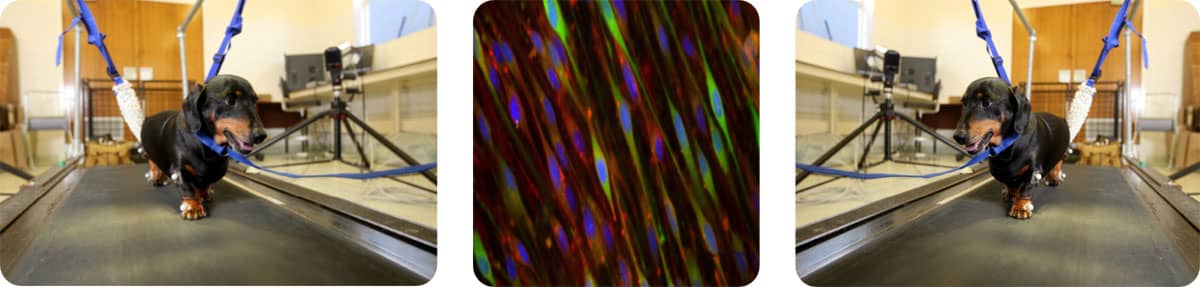
Olfactory ensheathing cells promote axonal regeneration in the damaged central nervous system
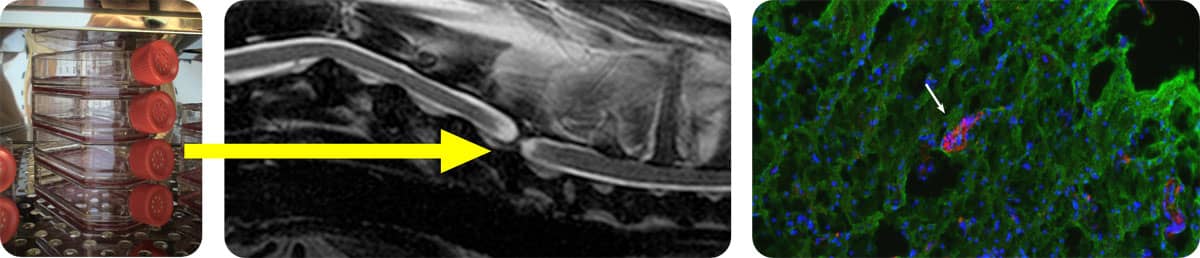
MRI pre and post transplant
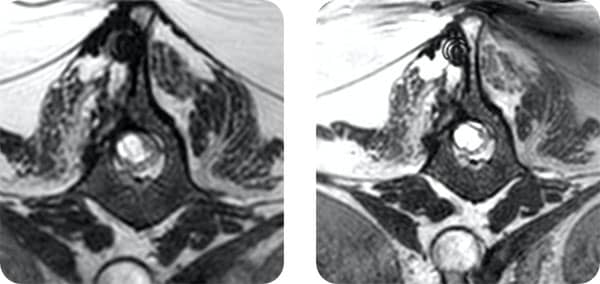
MRI lesion volume
